
The Power of Low Latency: techCONNECT Webinar
We recently held a webinar with South African WISP techCONNECT to learn more about how they use Preseem to fulfill their mission statement of providing fast, reliable, safe, and affordable internet to their community, backed with world-class support and education.
Founded in 2017, techCONNECT is based in Komatipoort in Eastern South Africa, near Kruger National Park and the border with Mozambique. They have a coverage area of 1,500 square miles serving a population of 750,000 in a largely rural, farming, low-income area.

During their discussion with Preseem Sales Engineer Sam McManus-Redden, techCONNECT’s co-owners Arno Joubert (CEO), and Nico Joubert (Business Development Director), mentioned how using Preseem has helped them:
- Increase ARPU by 58%
- Increase MRR by 30% year-over-year
- Decrease maintenance and support calls by 20-30%
They also talked about how Preseem’s data has helped them identify and resolve high network latency issues, improve efficiency across their teams, and provide a better quality of experience for their subscribers.
Read on for a recap of the discussion or view the full webinar here.
Community Challenges and Impact
One of the unique challenges that techCONNECT faces is load shedding, rolling electrical supply blackouts caused by a long-running energy crisis in South Africa. These blackouts last from two to four hours, up to three times each day, and mean that WISPs need to budget an additional amount just to ensure that their network is always up and running.
Other challenges mentioned by Arno and Nico include cash flow problems caused by the recurring load shedding issue, natural phenomena such as flooding and lightning strikes, and competition from fiber providers and local, provincial, and national wireless carriers.
There’s also high unemployment in the area, though techCONNECT has found that they can help in that regard—by enabling small, rural, mom-and-pop businesses to become connected with reliable internet, those businesses can make more revenue, hire more people, and put more money into the community to help it prosper.
“It’s really important. I feel that the internet quality for the entire region needs to get better and Preseem is the way to go to do this,” said Arno. “Without Preseem, I think we’d be dead in the water.”
Reducing Latency is the Key to a Healthy Network
One of the issues Preseem immediately helped techCONNECT identify was that the main problem affecting their network health was latency. Specifically, Preseem revealed outliers on the network that were negatively impacting performance. This allowed them to target the APs and CPEs responsible for the latency issues and fix any issues with pinpoint accuracy.
“Preseem makes it so easy by giving us RF Scores and Business Value Scores,” said Arno, adding that the scores are so easy to understand their business development team can now let the support technicians know about network issues that need to be addressed.
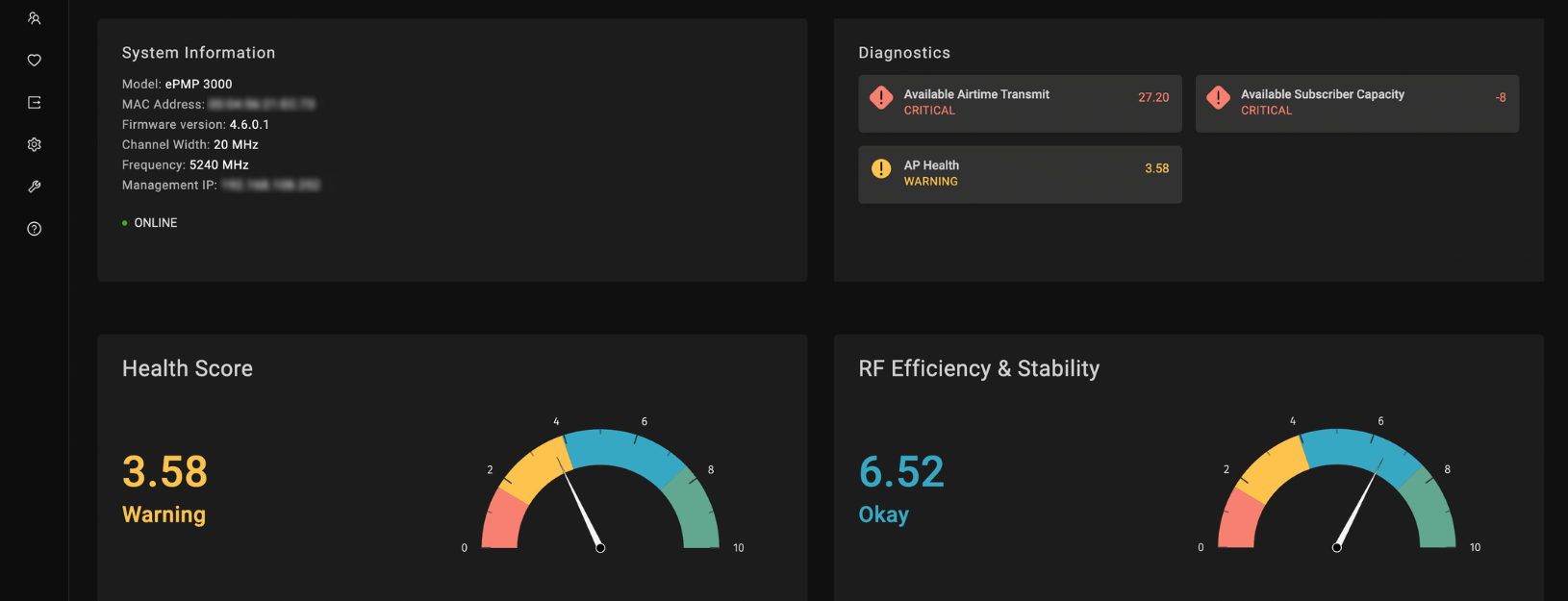
The company motto at techCONNECT is “Latency is a swear word,” and they’ve committed to a modest but achievable goal to have all APs at a maximum of 100ms. They’ve also pledged to educate customers and prospects that latency is more important than plan speed in achieving a superior experience.
For example, Arno and Nico talked about an interesting stat from the Fixed Wireless Network Report that shows how bandwidth consumption does not necessarily grow in tandem with higher plan speeds. As mentioned in the report, on plans under 100 Mbps, subscribers actually only use around 5 Mbps. They could see proof of this in their network with subscribers accessing a popular sports streaming network on 1 Mbps plans when the network itself recommended a minimum of 10 Mbps.
To educate customers that latency is more important than speed, they use the analogy of Preseem being a traffic cop waving through all the fast cars (streaming, VoIP, etc.) while the big trucks (system updates) are kept idling off to the side until everyone else is through. We really like this analogy, and used a similar one in our blog on how active queue management keeps web traffic flowing to improve QoE.
Solving AP Capacity Issues Has Improved Cashflow
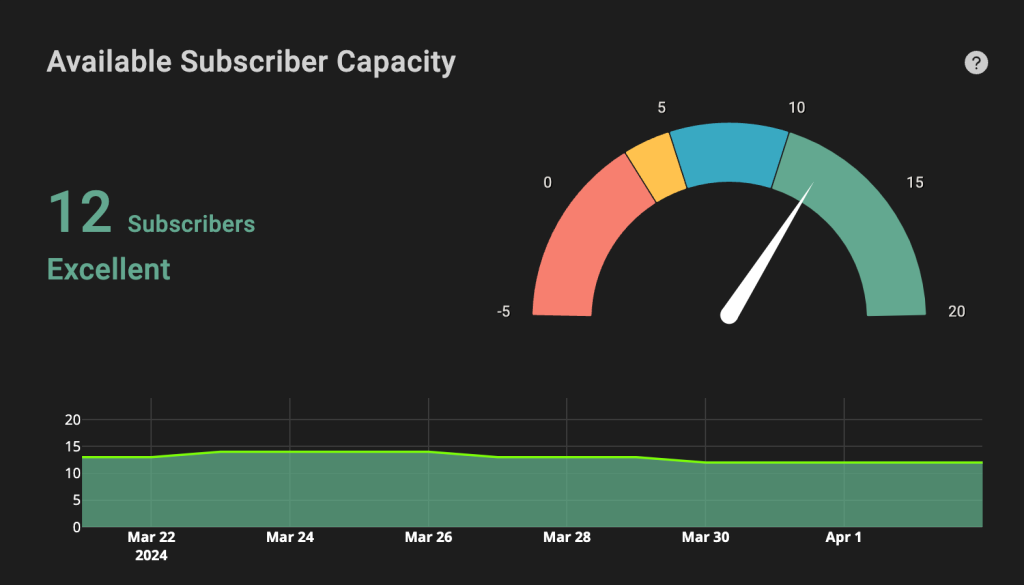
Preseem’s ability to show access point capacity in simple, practical terms has also become a key part of helping techCONNECT become more efficient and proactive. As Arno related, the sales team now uses Preseem to check “the AP capacity before marketing to those APs in certain areas, and that obviously helps us with cashflow because we can capacity plan better and we can fill our APs that have a better Business Value score first.”
As well, Preseem’s Automatic AP Capacity Management feature has been helping the company’s bottom line. “The auto shaping has literally fixed the APs that are bad on the network, our red APs,” said Arno. “That helps with cashflow again because we don’t have to upgrade those access points.” He said it’s also helped their good APs get even better and led to a “a total drop in latency” overall.
As evidence of this, Arno said that since implementing Preseem, Average Revenue per User (ARPU) has gone from R443 to R700 (approx. $23.65 USD to $37.38 USD), a 58% increase. Their Monthly Recurring Revenue (MRR) has also increased by 30% year-over-year. Nico said Preseem has now become something that all the teams at techCONNECT look at and use for their jobs, not just the owners.
“As business owners, for us, sitting and working on the Access Points and figuring it out is not the best use of our time,” said Arno. “The best use of our time is working strategically. But we need to give the guys on the grassroots level the tools to be able to do this on their own, and this is what Preseem allows us to do.”
Asked about the return on investment from deploying Preseem, Arno said that the ROI was realized very quickly, i.e. within a month. “It’s a no-brainer to me,” he said.
Faster Troubleshooting = Happier Customers, Fewer Truck Rolls
Arno and Nico also mentioned how Preseem’s integration with Splynx has made troubleshooting easier. In one example, they showed how the support team was able to isolate CPE latency as the cause of a customer issue simply by viewing the easy-to-understand scores and metrics in Preseem and ruling out other possible causes quickly.
“Preseem has enabled us to give the clients answers immediately,” said Arno. As a result, Level 1 tech support can now confidently give answers to clients without having to escalate, defusing the situation quickly and keeping the subscriber happy.
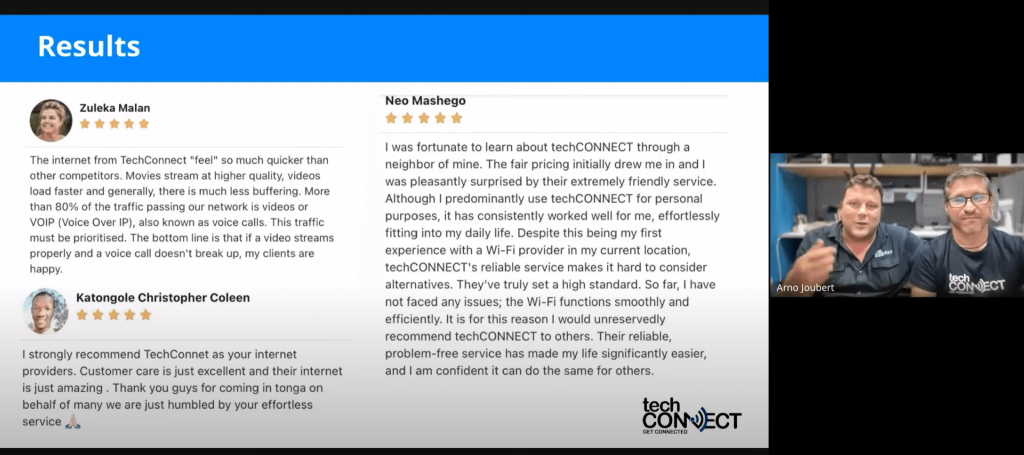
During the Q&A session at the end of the webinar Nico mentioned that using Preseem to reduce latency has led to a “20-30% decrease in maintenance calls (and) complaints from the client’s side. Our standby department has been way quieter, way less calls, since hitting the latency goals.”
Arno added that truck rolls have also decreased because frontline staff can troubleshoot effectively without having to send technicians out into the field. “Clients aren’t complaining as much, the phone calls over the weekends aren’t as much, we’re able to be more proactive, and we’re getting more good reviews from the clients,” he said.
Click below to watch the full webinar. If your ISP is interested in improving the subscriber experience and increasing revenue while decreasing support calls and truck rolls, book a demo with us, and we’ll walk you through how Preseem can help on a live network.