Fixed Wireless & Fiber Year in Review
With 2025 growing closer on the horizon, it’s time to take our annual look back at what happened in the world of fixed wireless and fiber in 2024.
Hot topics in the ISP industry this year included the continuing saga of the BEAD rollout, the introduction of broadband nutrition labels, and ongoing discussions of the relative merits of fixed wireless and fiber—and the related emergence of hybrid networks combining the two access technologies.
Here at Preseem HQ, we were honored to win the WISPA Service of the Year award for the fifth time in six years, and were thrilled to launch a re-branded version of the ISP Network report, while continuing to develop and release new features that help fiber and fixed wireless (and hybrid) operators proactively improve efficiency, reduce churn, and drive growth.

January
2024 began with some unfortunate news, as the FCC announced the winding down of the Affordable Connectivity Program (ACP) due to lack of funds. The ACP provided over 20 million US households with a monthly $30 subsidy toward fixed or mobile broadband service, and officially ended on June 1.
The Wireless Internet Service Providers Association (WISPA) was also in the news in January, raising new concerns about an overreliance on fiber in the $42.5B Broadband Equity Access and Deployment (BEAD) program. On a related note, the organization also underwrote the Broadband Funding Optimization Tool that helps ISPs determine where to set their extremely-high-cost per location thresholds.
Finally, a January study from Parks Associates found that FWA subscribers from mobile network operators are more likely to be satisfied with the price of their service as opposed to other access technologies, while fiber subscribers showed the strongest confidence in the service they receive.
As for Preseem, we held a webinar to celebrate the release of our annual Fixed Wireless Network Report in January. We recently released our 2025 edition of this report, now rebranded as the ISP Network Report. More on that later, but make sure to download your free copy here!
February
In February, the Preseem Team attended the NTCA RTIME conference in Tampa, and held a joint webinar with TDL Gentek and Tarana on our findings from the 2024 ISP Network Report. In product news, we launched new features for fiber and hybrid ISPs that allow operators to seamlessly access all of their operational data in one place, saving staff members from having to log into multiple systems for each access technology and vendor. Watch the webinar introducing the new features below.
BEAD updates continued to dominate industry news throughout the year, including a plea from the U.S. Commerce Secretary urging small ISPs to apply for grants. In other funding news this month, the U.S. Department of Agriculture announced over $770M in new funding for rural infrastructure, including over $50M for the Reconnect program for ISPs.
Cox Communications released a report in February that showed the availability of high-speed internet in rural areas improved residents’ lives and encouraged young people to stay in those communities. Along with BEAD, another common theme throughout the early part of the year was the FCC’s broadband map—in February, a coalition of broadband providers noted ‘significant errors’ with the early drafts.
March
Related to the broadband map, WISPA responded to rural commenters’ claims that fixed wireless provider data reporting was flawed. Meanwhile, the FCC voted to raise its internet speed benchmark for the first time in almost a decade, saying that ISPs should provide at least 100 Mbps download speeds and 20 Mbps upload speeds. Industry analysts noted, however, (as does our ISP Network Report) that most internet users don’t use their available plan speed.
New research from the Leichtman Research Group this month found that fixed wireless is driving broadband growth, while providers from around the world lauded FWA as a “market multiplier” in areas where fiber growth isn’t possible or cost-effective.

At the WISPAMERICA conference in Oklahoma City, Vistabeam CEO Matt Larsen cited the Leichtman study mentioned above while defending fixed wireless as a thriving technology that meets the needs of consumers by providing a great experience at an affordable price.
Preseem was also in attendance at WISPAMERICA, where we had a chance to showcase our proactive platform for regional ISPs and catch up with many of our fantastic customers. Some were kind enough to provide us with some on-camera testimonials, including how one saw a 30% reduction in churn after installing Preseem! After returning from OKC, we published a blog on subscriber data usage and trends based on our findings from the 2024 ISP Network Report.
April
In April, we hosted a webinar with South African ISP techCONNECT that explored how Preseem has helped them increase ARPU by 58%, boost MRR by 30%, and decrease maintenance and support calls by 20-30%. Watch the full webinar or read the recap for more.
We also hosted a webinar with our friends at Sonar this month, where we combined to take a deep dive into Mastering Hybrid Networks. On a similar note, we took a look at the rise of the multi-access multi-vendor network in our blog, and also drew on the ISP Network Report again for a comparison of AP vendors.
Also this month, WISPA asked the FCC for an exemption to Net Neutrality rules for all ISPs with fewer than 250,000 subscribers. Elsewhere, ISPs began rolling out broadband “nutrition labels” for consumers, while telecom analytics firm Pacifica’s Data Dive report examined the comparative benefits of fixed wireless and fiber. J.D. Power, meanwhile, found that 5G FWA had the highest customer satisfaction of all access technologies.

May
As we’ve already seen, comparing fixed wireless and fiber emerged as something of a trend in 2024—in May, Nextlink CEO Bill Baker got in on the act, showing how the two access technologies compared on speed-to-deployment, latency, performance, and cost.
The Information Technology and Innovation Foundation (ITIF) warned states not to overspend on fiber when building out broadband infrastructure, while industry leaders cautioned that middle mile infrastructure is just as important for rural broadband as the last mile. Meanwhile, legislation was introduced in Congress to streamline the permitting process for rural broadband infrastructure projects.
As for Preseem, our latest blog based on data from the 2024 ISP Network Report explored how RF channel width affects network quality of experience (QoE).
June
In June, we launched a 60-second explainer video that answers the very sensible question, “What is Preseem?” We also hosted a webinar with FISPA called Beyond Bandwidth that explained how we can help ISPs deliver amazing customer experiences. Watch the webinar below or read the recap here. Our latest blog entry for the month looked at how our centralized plan enforcement helps increase customer retention and improve efficiency.
In June industrry news, the FCC moved forward with their plans to reform letter of credit rules for broadband providers looking to utilize public money, while being pressed by industry heavyweights to continue funding broadband growth.
Further continuing the fixed wireless vs. fiber theme, NextLink Chief Strategy Officer and ex-WISPA CEO Claude Aiken mused “why not both?” on the Light Reading podcast.
July
In July, survey data from Recon Analytics showed that fixed wireless trounced cable broadband in Net Promoter Scores from subscribers. At the FiberConnect conference in Nashville, industry insiders noted that traditional WISPs are increasingly expanding into fiber as a means to not only survive but grow. Also, in the wake of BEAD and other funding efforts, the question remains: “How Wide is the Digital Divide?”
Preseem attended the aforementioned FiberConnect conference, and also released a longer version of our explainer video that showed how to Power Your ISP with Preseem. We also took a look at some network troubleshooting solutions for ISPs in our blog, with an eye on helping operators proactively find and fix issues, reduce support costs, and drive growth.
Our Product Tours were also launched this month—these offer step-by-step guides of our proactive platform, including product overviews for fixed wireless and fiber operators, and new Preseem features. Choose your tour here!
August
Preseem has multiple deployment models, including an option that can get ISPs up and running with the platform very quickly, with no network changes and no additional hardware required. Find out more in this blog we published in August, or visit our Deployment Models page for even more information.

In funding circles, the FCC announced plans to reignite the $9B Rural 5G Fund, while the NTIA issued guidance on using BEAD funds for FWA and LEO. Also finance-related, a study from Keynesian Technology found that BEAD and other federal funding programs could add up to $146B to U.S. GDP.
In other updates, the CEO of Broadband Forum was speaking our language when he said that lowering latency and improving the subscriber experience can lead to revenue growth for ISPs.
September
BEAD was heavily in the news in September, as the House Commerce Committee’s Communications and Technology Subcommittee held an oversight hearing on the program’s progress, and alternative technology advocates, including WISPA, called for the ‘right tool for the right job’ to be considered. Industry groups also suggested that LEO should be considered a last resort for the program. In other fixed wireless developments, Tarana announced that three operators were now using its program to deploy FWA.
At Preseem, we had a busy month that included the announcement of support for the Adtran SDX 6000 Series of OLTs and BDCOM OLT and EPON technology. We also published a success story and product tour on AirBridge Broadband, an Idaho ISP who saw an estimated 20% drop in service calls and truck rolls after deploying Preseem.
AirBridge Broadband Success Story
In addition, we published blogs detailing the top 10 reasons why ISPs choose our proactive platform, and took a technical deep dive into how Adtran, Calix and Ubiquiti compare on ONT receive power vs. fiber length.
October
Travel was a theme for Preseem in October, as our friendly team jetted to Las Vegas for WISPAPALOOZA 2024 and then headed to Cape Town, South Africa for our first-ever trip to AfricaCom. At WISPAPALOOZA, we were honored to receive the WISPA Service of the Year Award for the second consecutive year, and the fifth time in the last six years 🤯 Thank you again to everyone who voted for us! You can also check out our WISPAPALOOZA recap video here.
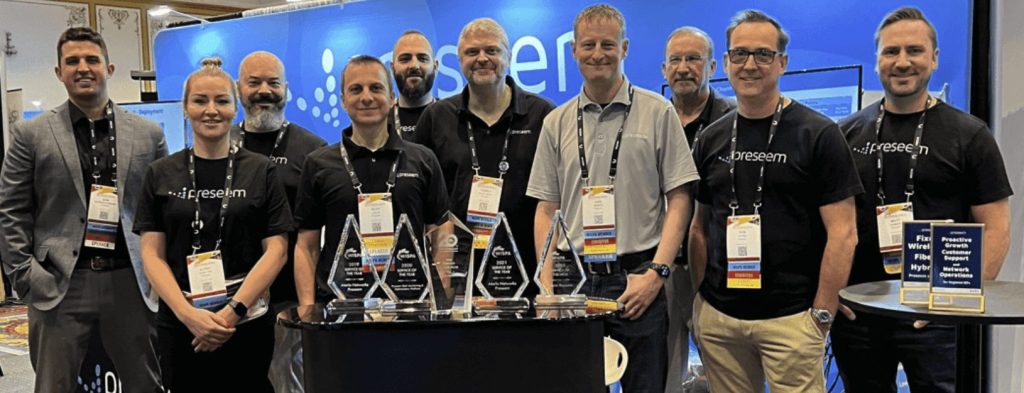
We also announced another new feature with the launch of our enhanced global search capabilities, and published a new technical blog exploring urban and rural FWA deployments.
Familiar industry themes continued to appear in October’s news: First, WISPA stated that BEAD will succeed if WISPs were allowed to participate. Second, rural operators continued to find flaws with the FCC’s development of a national broadband map. And third, more good news for fixed wireless providers as J.D. Power’s latest study found high customer satisfaction levels with their subscribers.
At the Connecting Communities Summit held at Tarana headquarters in California, BEAD director Evan Feinman said that the program was expected to continue under the new U.S. administration.
WISPA, meanwhile, pushed back on calls for a symmetric gigabit broadband standard from the FCC, with backing from other industry groups. And, in a response to an FCC review of customer service, ISPs said their commitment to excellence in that area was the reason subscribers rarely switch providers.
We continued our series of fiber and fixed wireless technical blogs in November, including examinations of fiber attenuation vs. fiber length, and fiber ONT Rx power vs. length over seven days. In two Tarana-related blogs, we looked at connected clients vs. RF utilization, as well as tower density and frequency reuse in Tarana deployments.
Lastly, our CTO Scot Loach put together a video presentation revealing four techniques for analyzing network data and turning it into value that can help drive growth. Watch the full video or read the blog recap here.
December
We decided to end the year the way we started it—with the release of the latest edition of the ISP Network Report.
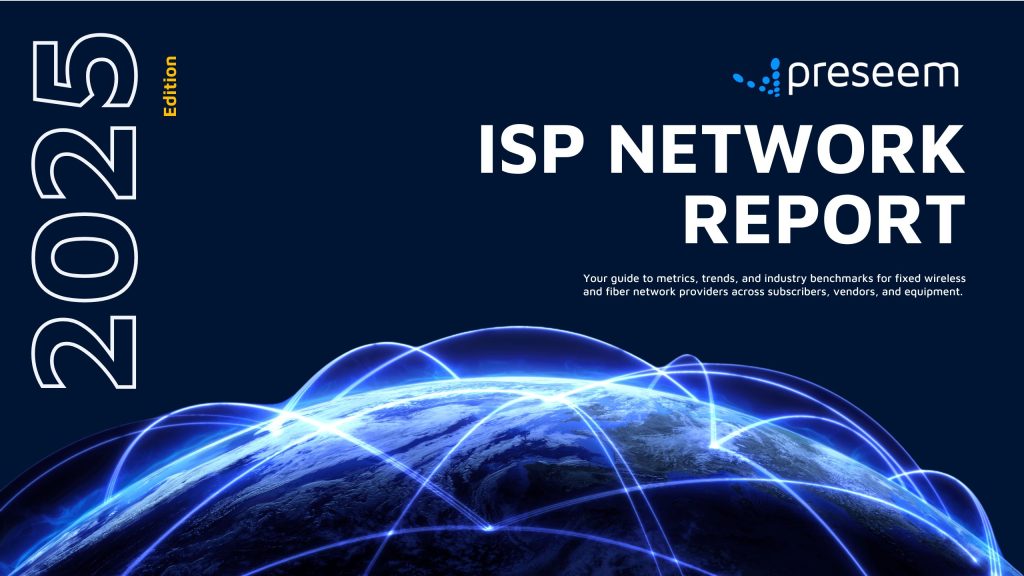
This year’s release includes data from Preseem’s fiber and hybrid customers for the first time. Also new this year is a comparison of subscriber metrics between fixed wireless and fiber networks, as well as the development of key industry performance benchmarks on subscriber churn, customer support, and network operations taken from Preseem’s first-ever ISP Operations Survey.
Download your free copy here, and check out our webinar for a deep dive on all the important metrics, insights, and highlights from this year’s report with our resident experts.
Welp, that’s another eventful year in the book for fixed wireless and fiber ISPs. We hope you enjoyed reading our review, and that you have a great and peaceful holiday season. We look forward to continuing to serve regional operators around the world in 2025. Happy holidays from all of us here at Preseem!