Key Takeaways
- ISPs running fiber and fixed wireless operations side by side often juggle three or more vendor platforms. That’s a lot of logins just to see the whole network.
- Each extra vendor tool adds a blind spot, not just another login. Data doesn’t carry over between systems, and nobody sees the full picture at once.
- A single dashboard that normalizes data across vendors speeds up training and troubleshooting, and helps NOC teams catch problems early.
- Herotel runs both fiber and fixed wireless. After unifying its network visibility, it cut new-hire training time by more than half.
Multiple access technologies under one roof isn’t the exception anymore; it’s just how regional networks grow. Fixed wireless operators are expanding fiber networks. Fiber operators are adding fixed wireless to reach addresses fiber can’t yet reach. Either way, the network operations team ends up running fiber and fixed wireless operations side by side, usually using different vendor tools for each. It’s a sound growth strategy, but it’s also how NOC teams end up buried in browser tabs.
That’s not a knock on any single vendor. Cambium’s dashboard does what it was built to do. So does Calix’s, and Nokia’s, and Ubiquiti’s, and so on. The real problem lies in the gaps between them, where no one’s dashboard has the full picture. It’s part of the same visibility gap mapped out in our Complete Guide to Reducing Churn and Support Calls for Regional ISPs, just wearing a multi-vendor costume.
Why Fiber and Fixed Wireless Operations Create Blind Spots When Managed Separately
This shows up constantly in multi-vendor fiber networks. A NOC team can pull light levels off an OLT well enough, but seeing how those levels are trending, or how utilization is shifting across the PON, is a different problem entirely. Most vendor tools weren’t built to answer that second question. That’s not a small gap; it’s the difference between catching a slow-motion problem while it’s cheap to fix, or hearing about it after a subscriber has already called three times.
Multiply that gap across every vendor in a hybrid network, and the pattern gets clearer. Diagnosing a single customer issue might involve checking the RF conditions at an access point. Then, an OLT system for PON health. Then, a separate CPE portal for the radio, and a billing system to confirm the plan.
None of these talks to the others. Every system has its own login, its own data format, its own quirks. A new hire has to learn all of them from scratch. That’s expensive in the obvious way: training time, onboarding, extra tool licenses. It’s also expensive in a way that’s harder to see, like senior engineers spending hours context-switching instead of actually fixing things.

We touched on part of this problem in Why ISP Support Teams Stay Stuck in Firefighting Mode. When support can’t see what’s happening on the network, every ambiguous call gets escalated to the NOC “just in case.” A NOC engineer running fiber and fixed wireless operations across five tools faces the flip side of that same problem. They can technically see what’s happening, but only one slice at a time.
The Real Cost of Tool-Hopping
None of this is abstract. A 2026 fixed broadband report from Opensignal notes that even the largest national carriers are leaning harder into hybrid strategies. They’re pairing fiber builds with fixed wireless as a fallback when fiber economics don’t pencil out. If that’s the direction national players are heading, regional ISPs already juggling both technologies aren’t dealing with a temporary complication. This is the new normal, and it’s worth building operations around it, rather than working around it.
Fragmented tools get worse with scale, not better. Herotel, one of South Africa’s largest fixed wireless and fiber operators, ran more than 200,000 subscribers across eight separate OLT systems before consolidating. Its support lead bluntly described the old process. Finding a single customer’s connection meant going “through these eight different OLTs” and hoping for the best. No amount of onboarding will fix that kind of architecture gap.
Support and field teams feel this, too. When regional ISPs detect problems before customers notice, it’s usually because someone built a proactive process on reliable, unified data. Fragmented tools work against that goal by definition. If half the network’s data lives in a system that support can’t access, they can’t be proactive about that half. It doesn’t matter how sharp their instincts are.
What “One Dashboard” Actually Means for Multi-Technology ISPs
“Single pane of glass” gets thrown around a lot in networking. It’s worth being specific about what actually matters here. A dashboard built for fiber and fixed wireless monitoring does three things. Things a pile of separate vendor tools can’t do:
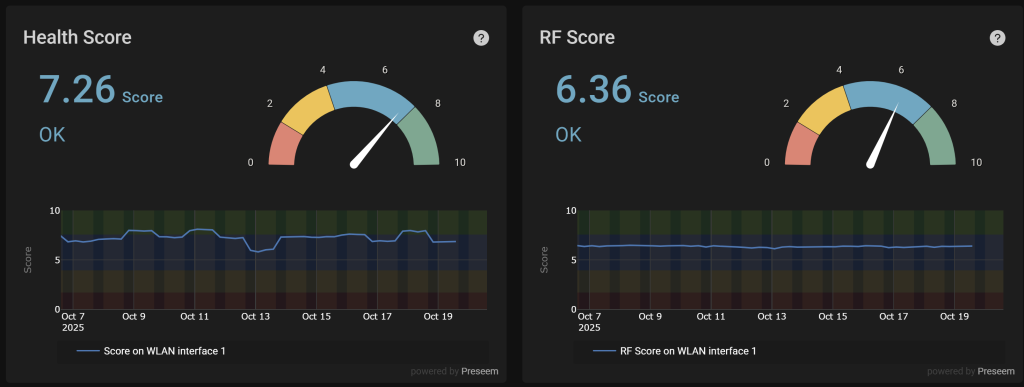
- Normalizes data across vendors. RF quality on a Cambium radio and light levels on a Calix OLT get translated into comparable, plain-language health scores. No more vendor-specific jargon that only engineering understands.
- Connects the subscriber to the equipment. One lookup shows which AP or OLT a customer sits on. It shows what that equipment is doing right now, and whether the issue is network-side, CPE, or in-home.
- Keeps history, not just a live snapshot. Vendor tools usually show the current state only. A dashboard built for real ISP network visibility keeps historical trends. That lets a NOC engineer catch a splitter degrading over three weeks, rather than waiting for it to fail outright.
Preseem was built around this idea. It pulls performance data from every major access point, OLT, and CPE vendor into a single, normalized view, whether fiber or fixed wireless. It’s the same proactive-visibility approach behind our Complete Guide to Reducing Churn and Support Calls for Regional ISPs. Catching degradation early only works if the data is actually visible in the first place.
What Changes When NOC Teams Get a Multi-Technology ISP Dashboard
The Herotel numbers are worth sitting with. After moving support and NOC visibility into a single platform, Herotel cut new-hire training time from two months to three or four weeks. That’s a drop of more than 50%. It’s not because the new hires got smarter. It’s because they only had to learn one interface instead of eight.
The ripple effects show up in day-to-day operations too:
- Faster troubleshooting. One Herotel team lead said historical data in a unified dashboard helped him solve a problem in minutes, where the same problem used to take days of cross-referencing separate systems.
- Fewer escalations to the NOC. When support agents can see equipment health and RF conditions themselves, they stop forwarding every ambiguous ticket up the chain “just in case.” That frees up NOC time for real engineering work.
- Consistent workflows across regions and technologies. Multi-vendor environments tend to produce inconsistent processes, as different teams build their own workarounds for different tools. One dashboard removes the need for those workarounds in the first place.
This isn’t unique to one operator. For example, RCR Wireless reported in 2026 on T-Mobile’s push into hybrid fixed wireless and satellite broadband. The broader trend is toward blending access technologies under unified management, rather than treating each one as a silo. Regional ISPs already running fiber and fixed wireless operations are ahead of that curve. That’s true as long as their tools keep pace with their network mix.

Bringing Fiber and Fixed Wireless Operations Into One View
None of this requires ripping out existing equipment or standardizing on one manufacturer. That isn’t realistic for most growing ISPs anyway. It means adding a layer that sits above the vendor tools and translates everything into one consistent view. NOC teams keep their existing gear, but the changes are in how much of it they can see at once and how quickly they can act on what they find.
For operators managing fiber and fixed wireless operations under one roof, that shift tends to matter more than almost any single feature upgrade on any one vendor platform. It’s the difference between a team that reacts to one ticket at a time and a team that can look at the whole network and decide where to focus next.
If churn and support costs are also on your radar, our Complete Guide to Reducing Churn and Support Calls for Regional ISPs covers how network visibility, proactive monitoring, and support efficiency connect back to the bottom line.
See how a unified dashboard would look across your own fiber and fixed wireless networks. Request a walkthrough and bring your messiest multi-vendor case to the call.
FAQ
What does “single pane of glass” mean for an ISP?
It means one interface shows performance data from every access technology and vendor on the network. Fiber and fixed wireless included. No separate logins for each vendor’s own management system.
Can a unified dashboard work with equipment from multiple manufacturers?
Yes. Tools built for multi-vendor environments pull data from each manufacturer’s equipment. Think Cambium, Ubiquiti, Calix, and Nokia, for example. That data is normalized into a single consistent format, so NOC teams don’t have to learn a new interface for every brand of gear on the network.
Does consolidating tools mean replacing existing network equipment?
No. A dashboard like Preseem sits on top of existing vendor equipment and pulls data from it. There’s no need to standardize on one manufacturer or rip out equipment that’s already working fine.
How long does it take to see a return from unifying network visibility?
It varies by network size. Most operators see faster troubleshooting and fewer escalations within the first few weeks. The main barrier being removed is tool-switching, not the underlying network itself.